
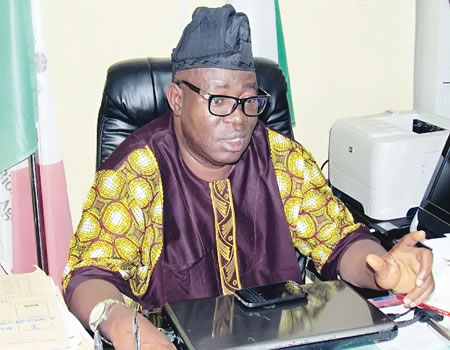
 Director General/ Chief Executive Officer of the National Biosafety Management Agency (NBMA), Dr Rufus Ebegba, in this interview with COLLINS NNABUIFE, speaks on the measures taken by the agency to ensure compliance with Biosafety requirements by importers of Genetically Modified Organisms (GMOs), and other issues related to Biotechnology.
We learnt that recently there are concerns raised over the importation of GMOs into the country, are you aware of this?
I want to sound a note of serious warning to the importers of genetically modified grains and seeds and other genetically modified foods. The agency has observed with serious dismay the attempts by some genetically modified seed and grains importers not to follow the due process as it concerns the issue of biosafety permit. Some of them have decided to circumvent all necessary biosafety procedures for them to bring in genetically modified organisms.
It is important that before any importer brings into the country any genetically modified organism, there must be a biosafety permit. Risk assessment must be carried out on such product before they are released into the environment.
We have noticed of recent, quite a number of importation of grains suspected to be genetically modified, and these importers have tried to evade the need for them to obtain a biosafety permit. I want to say it categorically, there are serious consequences for any importer of genetically modified seeds or grains into this country without biosafety permit or following due process as required by the National Biosafety Management Agency Act of 2015. The agency will not hesitate to close down any company, or arrest any importer that goes into the importation of genetically modified seeds or grains without biosafety permit.
We rely heavily on our partners, other agencies, particularly the brother agencies, to assist the agency particularly when the agency is not at the border. We will consider it very important for the agency to also be at the border because of the recent development.
We want to ensure that the procedures, practices and processes involved in biosafety in this country are transparent and for the good of Nigerians. The National Biosafety Management Agency is here to ensure that the practice of genetic engineering and the use of genetically modified organisms are safe for Nigerians and the environment. We want to re-emphasize our commitment to the interest of Nigerians. We want to re-emphasize our interest to ensuring that the environment is safe from any potential adverse effect of genetically modified organisms.
We assure Nigerians once more that the National Biosafety Management Agency will do whatever it takes to ensure that only safe products that are genetically modified will be allowed into the Nigerian environment.
What are the guidelines for importation of GM seeds?
The guidelines we have are like any other guideline we have for the release of genetically modified organisms. In the National Biosafety Management Agency. We don’t really issue permit for import. What we issue is biosafety permit. This biosafety permit enables you to import, to release or to go into processing of genetically modified organisms within the country.
So if you have a biosafety permit, even if it is an imported product, you need that permit to enable you to meet other extant laws that will enable you to import such products into the country. So, our guidelines are very simple, there is a form which you have to complete. After the completion of the form, there are other processes which we have to carry out before giving you a nod, to say yes, we are processing your application and then we will carry out risk assessment on such products. And if we confirm them to be safe, before we issue the biosafety permit, that does not mean they will not meet other extant law requirements, like that of the Quarantine Service, Customs import permit and other import permit they need to meet. But they must meet our National Biosafety requirements before they will be allowed to bring in or to release within or outside the country.
Has the agency carried out enlightenment for importers?
We have had meetings with the importers of seeds and grains. We have had about three meetings with them, and what we understand from them is that some of them, knowing fully well that the products are genetically modified, tend to term them that they are not genetically modified.And we have also told them that there are some specific countries that even though you do not know that they are genetically modified seeds or grains, because they are coming from those countries that are already producing genetically modified grains and seeds, automatically, most of those seeds and grains coming from those countries are genetically modified organisms suspects. We suspect them. We have told importers that if they are coming from such countries, come to the agency for us to ascertain whether they are genetically modified or otherwise, and this enlightenment is ongoing. I see no reason why anybody will want to circumvent the biosafety system.
We did not say don’t bring in GMOs, but you must ensure that you meet our biosafety requirements and we expect them to do that. And as I have said, henceforth, anybody that is bringing genetically modified organisms, we are giving seven days ultimatum to all the importers of grains to this country to certify their products before they bring them in. We suspect them to be genetically modified, and we are going to go out on a massive survey and inspection of most of those companies that are bringing grains into this country. We are going to take specimens; anyone found to contain genetically modified materials, such companies will be prosecuted. They should come and formalise their dealings. If they fail to do so, we will take the necessary measures to ensure that these companies are sealed up when we confirm them to be be selling genetically modified seeds and grains.
We will not allow the Nigerian environment to be diluted with unapproved genetically modified seeds.
By the end of this year or next year, there are plans to release some GM seeds for commercialisation. What mechanism is the agency putting in place to ensure that these crops meet with the biosafety requirements?
We have already prepared for commercialisation. As for whether it is going to be this year or next year, it depends on how they are able to meet our required safety standards.We are still going to assess them for safety before we allow them to be commercialised. In as much as we have been with these trial for some years now, they still need to submit their safety data, food safety data and environmental safety data for us to analyze, and say they are now suitable for commercialisation.
As for the genetically modified cotton that was approved for commercialisation, as I said last year that it will still take one or more years before it can be fully commercialised. They have undergone on-station trials. They still need to meet other extant laws requirements within the country before they can be officially commercialised. In as much as we have confirmed them safe with our Biosafety assessment, they still need to meet other economic requirements as required by the Nigerian Agricultural Seed Council and other agencies. So as for them coming into the market, we are not fully too sure. Even if they do not meet the agronomic requirements, they may not even come into the market.
So, this Biosafety assessment is first. We must test and say yes, these things are safe. If they are safe, that is one step. There are other things they need to meet. So as for the confined field trials, until we certify the products, we will not allow them to be commercialised.
What is the development of surveillance on superstores?
As for the superstores, we have been monitoring their products, we go out survey from time to time collect some samples of their products for analysis. The issue of the superstores was a little bit trickier than we expected. We discovered that some of them actually invented for a permit to come into this country by some other sister agencies based on their safety standard and analysis. And we are now working closely particularly with the National Agency for Food Drugs Administration and Control (NAFDAC) to see that we streamline the process and some of these superstores have actually applied for their products to be approved for sale within the Nigerian market. Before now, we directed that they should withdraw their product, which we know some of them have complied with. We continue to monitor for compliance.
As for the superstores, one thing is that it is not that their products are not safe, but there is requirements for them to ensure that we analyse them, certify them within the country before they are allowed. The other countries where these products are coming from have actually certified them safe, but however, they need to meet our national requirements to ensure that the safety of Nigerians is guaranteed, and the Agency will continue to do that to ensure that only products that are safe will be allowed into the Nigerian market for consumption, planting or processing.
WATCH TOP VIDEOS FROM NIGERIAN TRIBUNE TV
- Relationship Hangout: Public vs Private Proposals – Which Truly Wins in Love?
- “No” Is a Complete Sentence: Why You Should Stop Feeling Guilty
- Relationship Hangout: Friendship Talk 2025 – How to Be a Good Friend & Big Questions on Friendship
- Police Overpower Armed Robbers in Ibadan After Fierce Struggle


