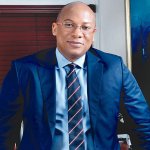
Seinde Fadeni, the Managing Director/Chief Executive Officer of GMT Energy Resources Limited, a major operator in the oil and gas services industry in Nigeria, in this interview with ‘Laolu Afolabi, explains why he’s investing in Nigeria’s energy sector, and why others should join him.
Power generation in Nigeria is becoming worrisome. As one of the operators of the sector, what are the steps your company is making to solve the problem of poor power supply in the country?
We are trying to see what we can do by adding more power to the grid. We are planning to have hybrid power from both diesel and gas. The major problem, however, is that pipes of gas being used to power the hybrid are being broken all the time, so this is a major challenge. We hope this will soon become a thing of the past.
Aside that, what other steps are being taken to solve this perennial power problem?
There is little we can do because gas majorly is produced by government, I mean the gas part of Petroleum and the Nigeria National Petroleum Corporation (NNPC) is mostly the regulator and producer. The corporation has partnership and association with international oil companies (IOCs) comprising Total, Mobil, Chevron etc. Basically, there is not much anyone can do except the shares of government in the IOCs are reduced, so that private investors can come in.
In your view, how long do you think it will take Nigeria to become an industrialised nation?
I cannot say, because of the inconsistency with our plans and programmes. For example, we had say Vision 2010, we had Vision 2020, and it keeps going on like that. I am very sure we will soon come up with Vision 2050. The point, however, is that we are not consistent, we seems to be an unserious nation. We try what we call vision but we do not follow it. Even when we have successive presidents from the same political party, our policies are not consistent. When Yar’Adua took over from Obasanjo, his vision was different from that of his predecessor. The policies of Jonathan was different from that of Yar’Adua, so, everybody come with their own policies and the thing we forget is that government should be a continuum.
For the current government, I don’t know but there is nothing impossible. The fact, however, is that four or eight years is too small for any government to perform magic. The present administration is doing more in fighting militants. Remember, we used to produce over 2.5 million barrels during the time of former President Jonathan, today, we are producing less than 1.5 million barrels. OPEC just cut the rate of production of all countries by 1.2 million, Nigeria is one of those countries spared of the hammer because we are not even producing to capacity and we have all it takes to perform, but our internal or local problems have hindered us.
GMT is positioning to become an integrated gas company in Niger Delta region, with upstream oil and gas interests. What exactly is your strategy to achieve this?
The strategy is to tap the gas that are being wasted and flared off. As we are producing crude oil, gas, in the process, is emitted. This gas is being burnt and flared into the air. We tap the gas and convert them to liquefied natural gas that could be used at home by selling it in cylinders and some of it too we will export. That’s the strategy. GMT Energy Resources is divided into three: Oil, Gas and Power. We have just diversified into power and what we are doing is to build some power generating plants. We are basically into support services both in logistics and in training, but soon, we will start generating power and we are in partnership with AKSA from Turkey for that purpose.
You have a dream of building refinery. How feasible is this?
Yeah, we are not planning to build big refinery but what we are trying to do is to build modular refineries. Modular refineries are these small units that can do like 5,000 barrels, 3,000 barrels, etc. If this is what we had been doing, we would have forgotten about importing fuel into the country today. There is nothing wrong with us having modular refinery of smaller units, say 5,000 barrels capacity, 10,000 barrels capacity, even 30,000 barrels capacity instead of waiting for one 300,000, 500,000 capacities that we will never achieve. Even the 100,000 barrels capacity that we have, they are not working up to 40 per cent capacity. Those are the ones at Warri, Port Harcourt and the one of Kaduna, they are not working to capacity because they are not well maintained and, therefore, not functional.
If Nigeria has modular refineries it would be better for the country. If we have 10 modular refineries in about 10 places in Delta State, that will have 100; in Akwa Ibom, if we have another 10 in about five places, that is 50; so 50 plus 100 will give us 150. Suppose we have another set in Warri and another in Port Harcourt, accumulating all these, one will find out that Nigeria will be producing 500 barrels per day and the problem would have been solved.
The Local Content Act, how has it benefitted the country?
The Local Content Act is one of the best things that formulated by the government. The Nigerian Local Content Act was established to encourage indigenous contractors. There was a time about 98 to 100 per cent of vessels in the country were owned by foreigners, but nowadays, we are coming up and the picture is changing.
The challenge, however, is that the government has to be consistent with whatever it is doing. For an indigenous person, he is supposed to get a contract for about five years that would yield enough time to raise money to build own vessel. For any contract that is awarded in Nigeria, they are supposed to keep the one per cent to develop local people.
The Act also gives the opportunity to a local contractor or local participant or players. Before, for example, if one wanted to buy a vessel, which will not cost less than $50 to $100 to $200 million, where can a Nigerian find that kind of money?
One can’t even get it. If one has to take a loan in Nigeria now, it is 26 per cent interest rate, what kinds of job will one do to return money of such interest rate? Whereas in Singapore, one can get a loan for one per cent or two per cent, but in Nigeria, it is 26 per cent.
We must do something that can make the interest rate to down, in order to encourage people to take loan, so that they can use it to develop the country.
Minister of Power, Works and Housing, Mr Babatunde Fashola, gave an indication that the energy industry faces hardship.
As a player in the industry, why do you and other investors believe in the energy industry? Why do you keep investing in the sector?
Truth is, there is nothing anybody can do without power, even what you are using to record this interview was powered. Without power, you can’t have an industry. Without power, you can’t have water and food, which are essence of life. It is the food you need to survive.
We are here today and there is light everywhere because of power, so whether we like it or not, we just have to continue to enjoy semi-power, because it’s the right thing to do and it’s a necessity of life. There is nothing anybody can do. However, the cost of production in Nigeria is abysmally high. The cost of production in Saudi Arabia, for instance is about $1 to a barrel, in Nigeria, it is over $25 to $30 to a barrel because of insecurity.
Now imagine, if you try to bring expatriate from abroad to come and work in Nigeria, he will get five times the value of what they would normally get in other countries because of the risk to their lives.
Tell me a childhood story that you carry with you every day.
That is the core value that my father taught me and which I have imbibed. These are hard work, honesty and forthrightness. They are the most important things to me.
Who has had the greatest influence on your career so far?
The biggest and greatest person is God, who has brought me from nowhere to where I am today by His grace. Yes, on my way to where I am today, God has used people to meet my needs and to fulfil my dreams; however, there are one or two people in my life.
I grew from Mayflower School, belonging to the late Tai Solarin and we were always told then that you can’t stop working until you can see the bones of your fingers.
That’s our philosophy and we were also told that our road will be rough. So I was not expecting the smooth road. I have been expecting the rough road. I was prepared for it by the grace of God and I thank God for where I am today.
WATCH TOP VIDEOS FROM NIGERIAN TRIBUNE TV
- Relationship Hangout: Public vs Private Proposals – Which Truly Wins in Love?
- “No” Is a Complete Sentence: Why You Should Stop Feeling Guilty
- Relationship Hangout: Friendship Talk 2025 – How to Be a Good Friend & Big Questions on Friendship
- Police Overpower Armed Robbers in Ibadan After Fierce Struggle